Collection guide instructions
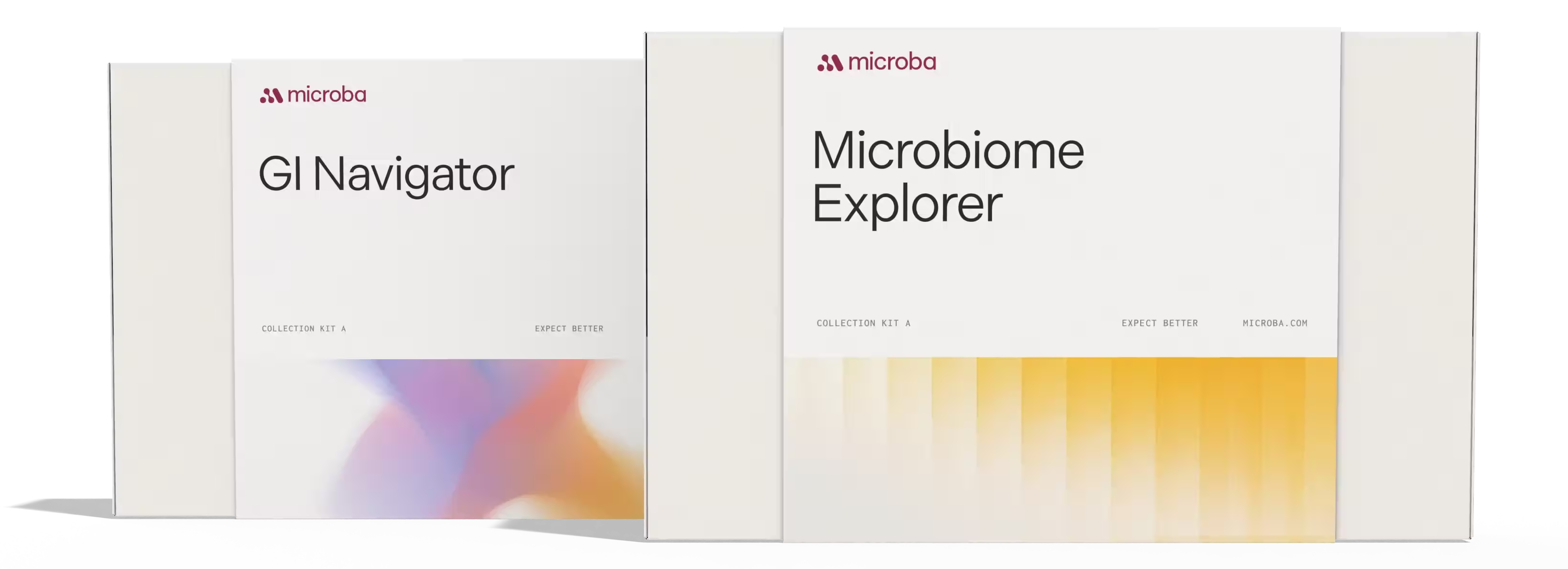
Select your kit
We've recently updated our collection kits. Select the kit that matches yours to view the correct sample collection instructions.
1. Prepare
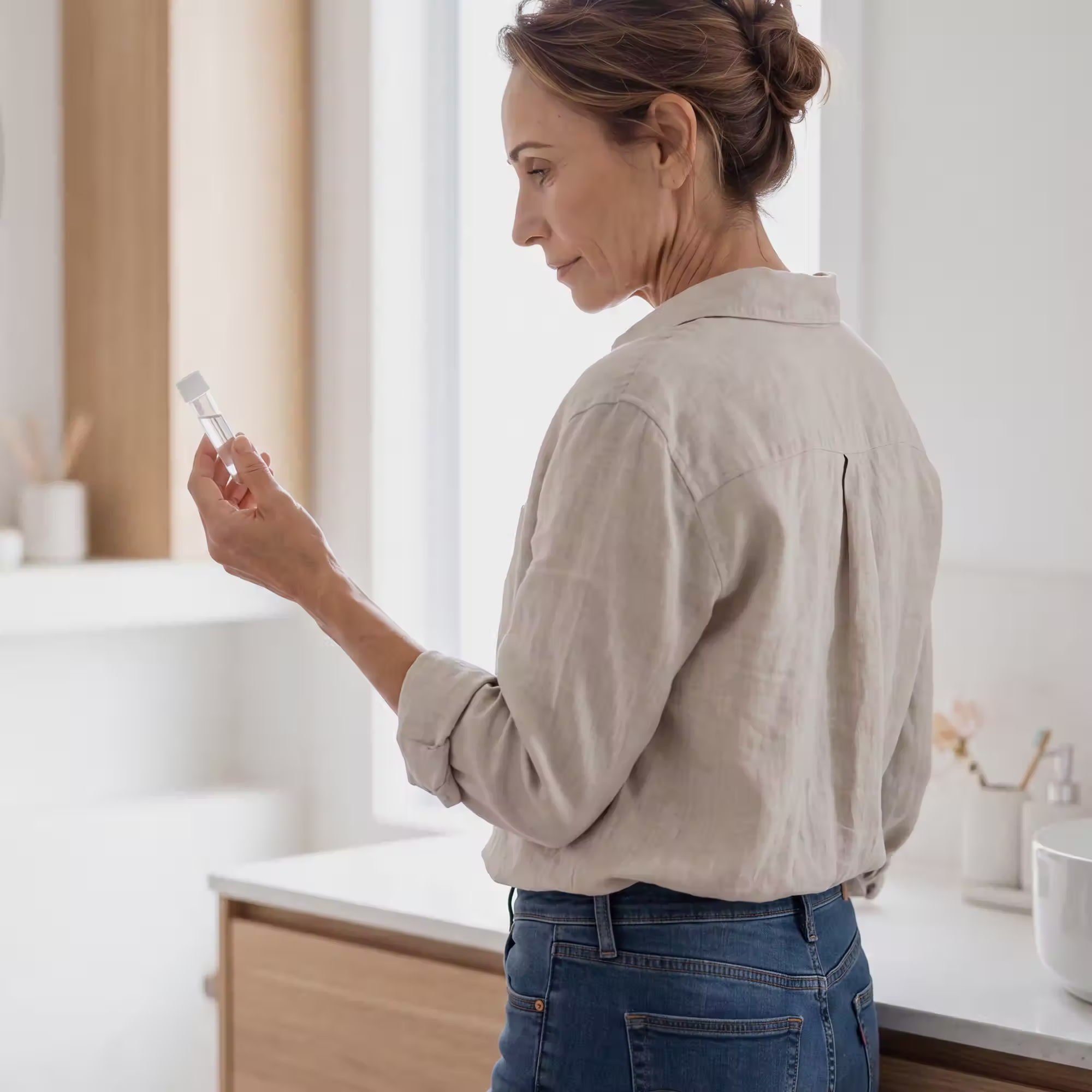
Essential things to know before you take your sample
01
Maintain your usual diet
Avoid starting new routines, supplements, or medications unless directed by your healthcare practitioner.
02
Ensure your kit is complete
Double check that you’ve received all components of the kit. Your instruction booklet will list all the items you need.
03
Avoid alcohol and NSAIDs
Alcohol or pain management like ibuprofen or aspirin can affect your results. Avoid these before testing unless otherwise directed by a healthcare practitioner.
04
Allow 30 minutes
When you are ready to take your sample, allow 30 minutes to complete the whole process. If you need any help, please don’t hesitate to call us!

2. Collect
For clear, step-by-step guidance to collecting your sample watch the related extended or comprehensive video below.
Instructions (AU)
Instructions (UK)
Instructions (AU)
Instructions (UK)

3. Pack & Send
Essential things to do after you take your sample
01
Seal your sample
Place and seal your sample in the pre-paid enveloped supplied with your kit.
02
Send the package
Return your sample over the counter at your local post office. It’s essential you do this on the day you took your sample.
03
We’ll do the science
Your sample will be safely delivered to our accredited laboratory for analysis.
04
Results ready
Once ready, your results will be shared with your healthcare practitioner. They will guide you through the results and share the report with you.

Interactive instructions
Swipe or use the arrows to turn pages. Select fullscreen to enlarge.
PDF Instructions
2.9MB

Related FAQs
Find answers to the questions we hear most often. From our technology and products to accreditation, partnerships and the future of Microba.
Can I still send my Insight sample back?
No — Insight samples can no longer be processed. We know some customers still have kits on hand, but as we communicated to all customers, we're no longer able to accept Insight samples. If you'd like advice on our current testing options, do reach out and we'll guide you through them.
What is Microbiome Explorer Essentials?
Microbiome Explorer Essentials is a comprehensive gut microbiome profile for overall gut health. It uses advanced metagenomic analysis to assess over 28,000 microbial species, including bacteria, fungi, and protists.
Do Microba Microbiome Explorer kits have an expiry date?
Yes — kits should be used before their printed expiry date, and we recommend returning them within a year of receiving them. While kits are stable for an extended period, using them within their expiry ensures the reagents and preservatives remain effective and the collected sample stays stable until testing.
What is Microbiome Explorer Comprehensive?
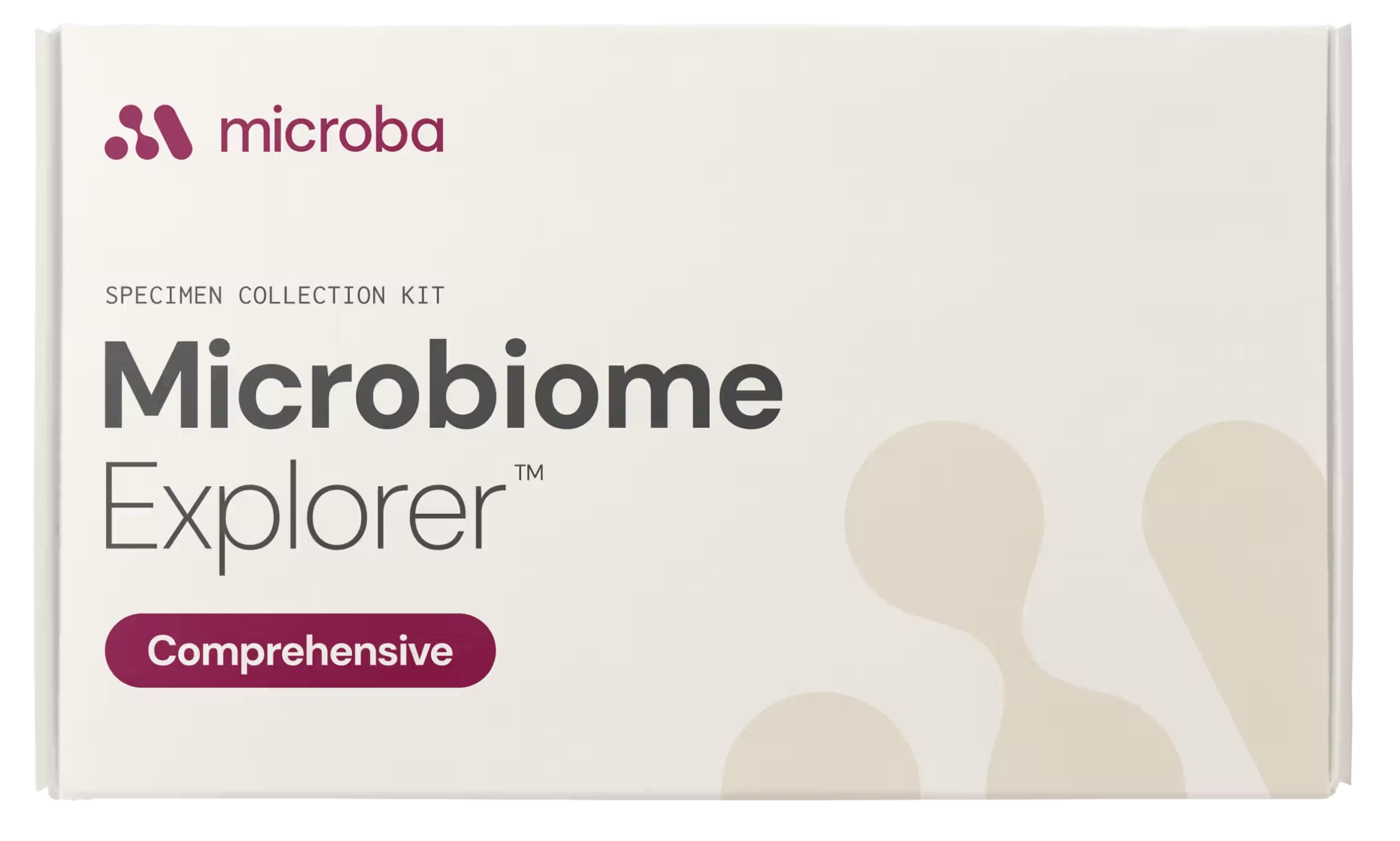
Microbiome Explorer Comprehensive is our most advanced test. It includes everything in Microbiome Explorer Extended, plus TGA and CE-certified pathogen and parasite detection panels — giving you the deepest possible look into gut health, microbiome activity, inflammation, and infection.
What is Microbiome Explorer Extended?
Microbiome Explorer Extended builds on the Essentials test with added clinical insight. It combines full microbiome profiling with TGA and CE-certified gastrointestinal markers — faecal occult blood, lactoferrin, calprotectin, secretory IgA, pancreatic elastase, and zonulin family peptides.
Are other products in the Microbiome Explorer range available in the UK?
Yes — all three product types are now available for purchase in the UK: Microbiome Explorer Essentials, Extended, and Comprehensive.
Does Microbiome Explorer test for SIBO?
No — Microbiome Explorer doesn't test for SIBO, and we know that can be frustrating because SIBO is difficult to diagnose.
Here's why. SIBO means there are excessive — often gas-producing — colonic microbes in the small intestine. Microbiome Explorer looks at microbes in the distal colon, and we can't assume the microbes there are also present in the small intestine. The two environments are different.
If SIBO is suspected, patients should be referred for further testing. It's worth noting that there's currently no validated gold standard for SIBO testing across the field.
Does Microbiome Explorer test for H. pylori?
Microbiome Explorer doesn't directly test for H. pylori, though here's how it works in practice.
H. pylori will only show up if it's present at over 0.01% relative abundance. If a patient has an infection but it doesn't appear, it may be because the DNA has degraded and isn't detectable in stool. And because H. pylori mostly lives in the stomach lining — and we test the microbiome of the lower large intestine — it's uncommon to detect it in stool.
That said, if it is there in higher abundance, our metagenomics technology will typically find it. The gold standard for detection remains the Helicobacter breath test.
Are Microba Microbiome Explorer services available outside Australia?
The Microbiome Explorer range is currently available in Australia and the United Kingdom.
In Australia, all three tests are available to practitioners — Essentials, Extended, and Comprehensive. In the UK, only the Comprehensive test is available, and it can be ordered by UK-based practitioners for UK clients.
For international referrals, you can refer the Essentials test to overseas clients from your practitioner portal. The Essentials swab doesn't contain a live sample and remains stable for up to six weeks at room temperature, so these kits can be shipped internationally and returned to our lab without issue. That makes Essentials the only suitable option for Australian practitioners referring clients outside Australia, including to the UK.
We know people around the world are interested in our services. At this stage, access is limited to patients within Australia and the UK, and testing must be organised through a qualified healthcare professional.
How long should I wait to collect my sample after finishing antibiotics?
Ideally wait at least one month after finishing antibiotics or antimicrobials before collecting a sample. After a short course of broad-spectrum antibiotics — five to 10 days — most gut microbial species return to baseline within one to two months.
Some changes can persist for a year or more, and there's limited data on prolonged antibiotic use, where recovery is likely to take longer. One study showed recovery only after nine months following three months of amoxicillin.
So the one-month minimum is what we advise based on current research, with the understanding that full recovery may take longer in some cases.