Beyond the Report: 7 Questions to Ask Your Gut Microbiome Testing Provider

What healthcare practitioners should look for when choosing a microbiome test.
Gut microbiome testing has advanced considerably, offering new opportunities to explore the relationships between intestinal microorganisms and human health. However, not all tests are created equal, and the quality of the information provided depends on much more than the technology used to generate it.
In 2025, an international panel of microbiome experts published a consensus statement in The Lancet Gastroenterology & Hepatology, outlining recommendations for responsible microbiome testing. The statement highlighted important considerations around analytical quality, reference populations, scientific evidence, reporting and clinical interpretation. It also emphasised that evidence supporting the routine clinical use of microbiome testing remains limited.1
For healthcare practitioners (HCPs) considering microbiome testing, these recommendations provide a valuable starting point. Here are seven questions worth asking your testing provider.
1. Is the testing performed under recognised quality standards?
Microbiome testing involves multiple complex steps, from DNA extraction and sequencing to bioinformatic analysis and interpretation. Errors or biases introduced at any stage can influence the final results.
Ask whether testing is performed in an accredited laboratory, what quality-control procedures are in place, and whether the bioinformatics methods have been validated.
Microba’s laboratory is accredited by NATA to ISO 15189, an international standard for quality and competence in medical laboratories. Microba employs rigorous quality-control procedures throughout sample processing and analysis. Each processing plate includes multiple controls, including real and mock microbial communities to monitor analytical performance, and negative controls to detect potential contamination. Predefined quality acceptance criteria are applied at key stages, including DNA extraction, library preparation and sequencing. Samples that fail quality control undergo repeat testing or re-collection, as required. The software used to analyse and interpret metagenomic data is developed under an ISO 13485-certified quality management system for medical devices. Together, these processes support consistent, quality-controlled analysis.
2. Has the sample collection method been scientifically validated?
The microbial composition of stool can change after collection if samples are not adequately preserved. Certain bacteria may proliferate or degrade during storage and transport, potentially distorting the microbial profile.
Ask whether the collection device has been independently evaluated using the same type of analysis employed by the test, and whether its performance has been demonstrated across realistic shipping temperatures and timeframes.
Not all stool collection methods are designed specifically for microbiome profiling. Some commonly used transport media, such as Cary-Blair, were originally developed to maintain the viability of enteric pathogens for subsequent culture, rather than to preserve the overall microbial community composition for metagenomic analysis.2,3 HCPs should therefore ask whether the collection method has been validated for metagenomic community preservation under realistic shipping conditions.
Microba’s collection method was evaluated in a peer-reviewed shotgun metagenomic study, demonstrating high reproducibility and preservation of microbial community composition over four weeks at temperatures ranging from −20°C to +50°C.4
3. What does the test actually measure, and how accurately?
Microbiome testing technologies differ substantially in the information they provide. Targeted PCR panels detect predefined organisms, while amplicon sequencing profiles selected genetic regions. Shotgun metagenomics sequences DNA throughout the microbial community, supporting broader species-level profiling and analysis of microbial genes and pathways.
However, technology alone does not guarantee accuracy. Ask whether the analytical pipeline has undergone published benchmarking, including evaluation of false-positive identifications and abundance estimates.
Microba uses shotgun metagenomics with its Microba Community Profiler (MCP), which has undergone extensive peer-reviewed benchmarking against nine other metagenomic classifiers. In this benchmarking study, MCP demonstrated high accuracy in species identification, achieving 99% precision, very few false-positive species identifications, and accurate estimates of species relative abundance.5 Microba’s analysis provides species-level profiles alongside an assessment of microbial functional potential.
4. Who makes up the healthy reference group?
Understanding how an individual’s results compare with a healthy population can provide useful context. However, these comparisons are only as meaningful as the reference population and methods used to establish them.
Ask how healthy participants were selected, whether their samples underwent the same collection and analytical workflow as patient samples, and how demographic or lifestyle differences are considered.
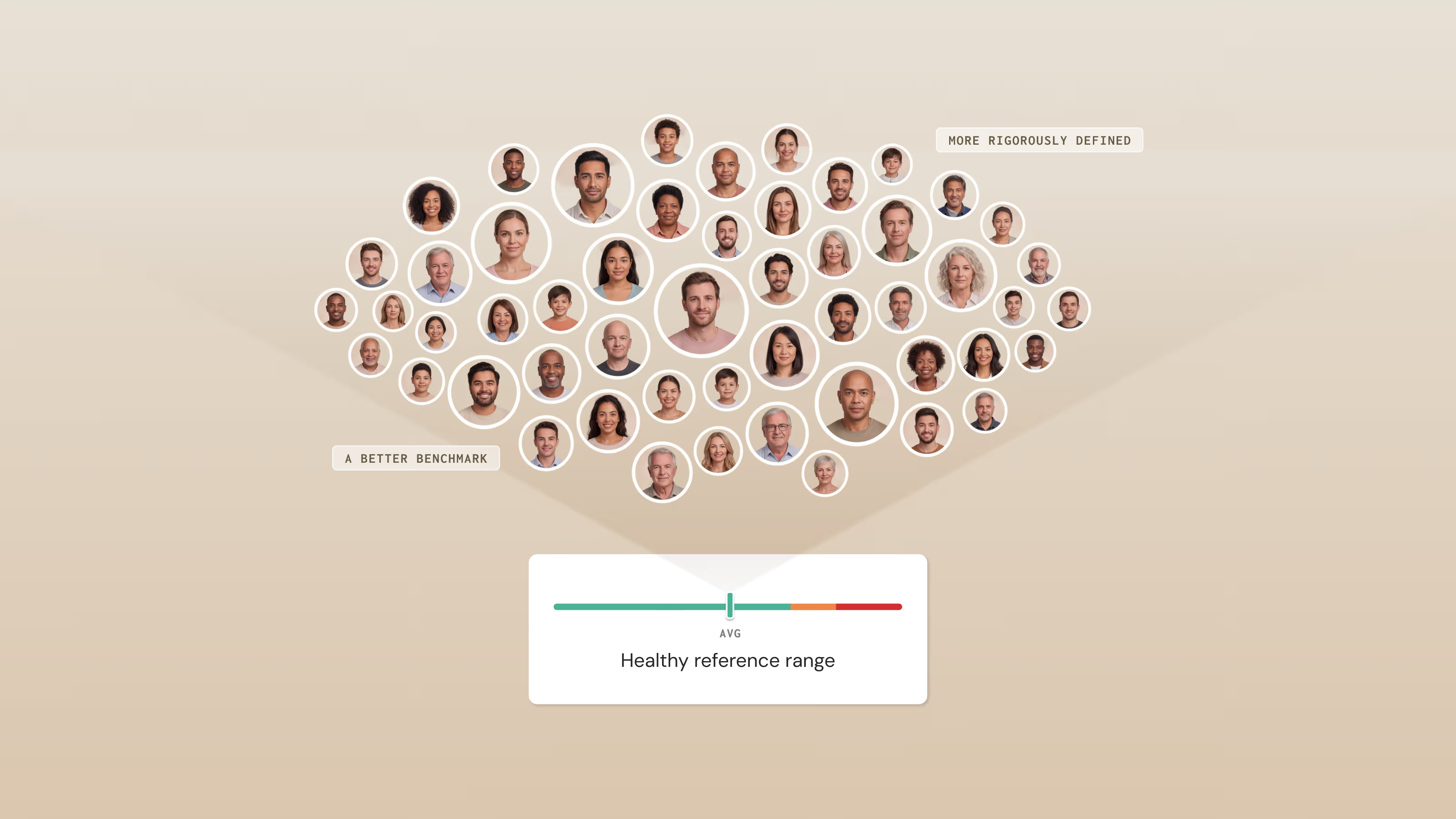
Microba’s healthy reference group comprises more than 500 carefully screened adults, selected to exclude major medical conditions and significant gastrointestinal symptoms, with additional criteria covering psychological wellbeing and lifestyle factors. Crucially, all reference samples were collected, processed and analysed using the same workflow as patient samples, minimising technical differences that could influence comparisons.
Reference populations also have limitations. Microba’s healthy reference cohort consists of 502 adults recruited in Australia, with participants reporting a range of ethnic backgrounds. Over 70% of participants identified as Australian, although many also identified with additional ethnic backgrounds (e.g. Australian and European, or Australian and Aboriginal). The remaining participants identified with backgrounds including European, New Zealand, Asian, African, Middle Eastern, Aboriginal and Pacific Islander. Although participants reported a range of ethnic backgrounds, the cohort may not fully represent the diversity of other populations, and demographic-specific reference intervals are not currently available. Comparisons with the reference population therefore provide context for interpreting microbiome results rather than established thresholds for determining health or disease.
5. What scientific evidence supports the markers and interpretations?
A microbiome report may contain numerous markers, health scores or disease associations. But the inclusion of a marker does not necessarily mean it has demonstrated relevance to human health.
Ask what evidence supports each marker. Is there a plausible biological mechanism? Have associations been reproduced in more than one independent human study? Has the provider validated these relationships in relevant populations?
Microba applies a three-tier evidence framework to its core microbial markers, requiring:
• Biological plausibility supported by experimental research.
• Reproducible associations in peer-reviewed human studies.
• Significant associations in relevant health or disease groups within Microba’s internal dataset of more than 19,000 metagenomic profiles.
This approach helps prioritise biologically meaningful and reproducible findings, although associations do not establish causation and microbiome-derived findings should not be interpreted as diagnostic indicators of disease.
6. Does the report distinguish scientific evidence from clinical certainty?
The consensus statement cautions against overinterpreting individual microbial species, simplistic indicators such as the Firmicutes-to-Bacteroidetes ratio, and unvalidated dysbiosis indices1.
Ask whether the report clearly distinguishes established clinical findings from emerging microbiome research. Are limitations explained? Are findings presented as associations rather than diagnoses or predictions of disease?
At Microba, the evidence framework described above guides the selection of core microbial markers, while recognising that even well-supported associations do not necessarily establish clinical utility.
Transparent reporting should help practitioners understand what the results can and cannot establish, rather than presenting every deviation from a reference population as a problem requiring correction.
7. What evidence and support are available to help interpret the results?
Receiving a detailed microbiome report is only the beginning. Practitioners also need to understand the strength and limitations of the evidence behind any findings.
Ask whether the provider references the evidence supporting its findings, explains how strong that evidence is, and offers access to scientific education and qualified support.
Microba summarises published research relevant to its reported markers and grades the strength of that evidence using the National Health and Medical Research Council (NHMRC) evidence framework. These evidence summaries, with supporting references, are available to healthcare practitioners through Microba’s practitioner resources.
These summaries are intended to help practitioners understand the current research and its limitations, and are not treatment recommendations. They do not establish that modifying an individual microbial marker will improve patient outcomes. Management decisions remain with the treating practitioner, based on the patient’s full clinical picture. Microba also provides training, educational resources and scientific support for healthcare practitioners.
Choosing a test with confidence
As microbiome science evolves, the value of testing will depend not simply on how much information a report contains, but on the reliability of its measurements, the strength of the supporting evidence and how responsibly findings are interpreted.
Microbiome results should be considered alongside patient history, symptoms, other investigations and the broader clinical picture.
The most important question is not just what a microbiome test measures, but how confidently its findings can be interpreted.
References
- Porcari, S. et al. International consensus statement on microbiome testing in clinical practice. The Lancet Gastroenterology & Hepatology 10, 154–167 (2025).
- Cary, S. G. & Blair, E. B. New transport medium for shipment of clinical specimens i. Journal of Bacteriology 88, 96–98 (1964).
- Chen, Z. et al. Impact of Preservation Method and 16S rRNA Hypervariable Region on Gut Microbiota Profiling. mSystems 4, 10.1128/msystems.00271-18 (2019).
- Pribyl, A. L. et al. Critical evaluation of faecal microbiome preservation using metagenomic analysis. ISME COMMUN. 1, 14 (2021).
- Parks, D. H. et al. Evaluation of the Microba Community Profiler for Taxonomic Profiling of Metagenomic Datasets From the Human Gut Microbiome. Frontiers in Microbiology 12, 643682 (2021)

Continue reading





Become a Microba practitioner
Create your free practitioner account to explore Microba, access education and resources and get ready to start testing.

1. Create your free account
Complete a short registration, tell us about your practice and set up your login. You’ll get immediate access to the practitioner portal and education hub.

2. Verify your account
Access the practitioner portal and education hub while we verify your credentials. Verification is required before you can order tests.

3. Start with Microba
Once verified, you can order tests for your patients, explore Microba’s product range and access practitioner resources.