A sharpened Microba report
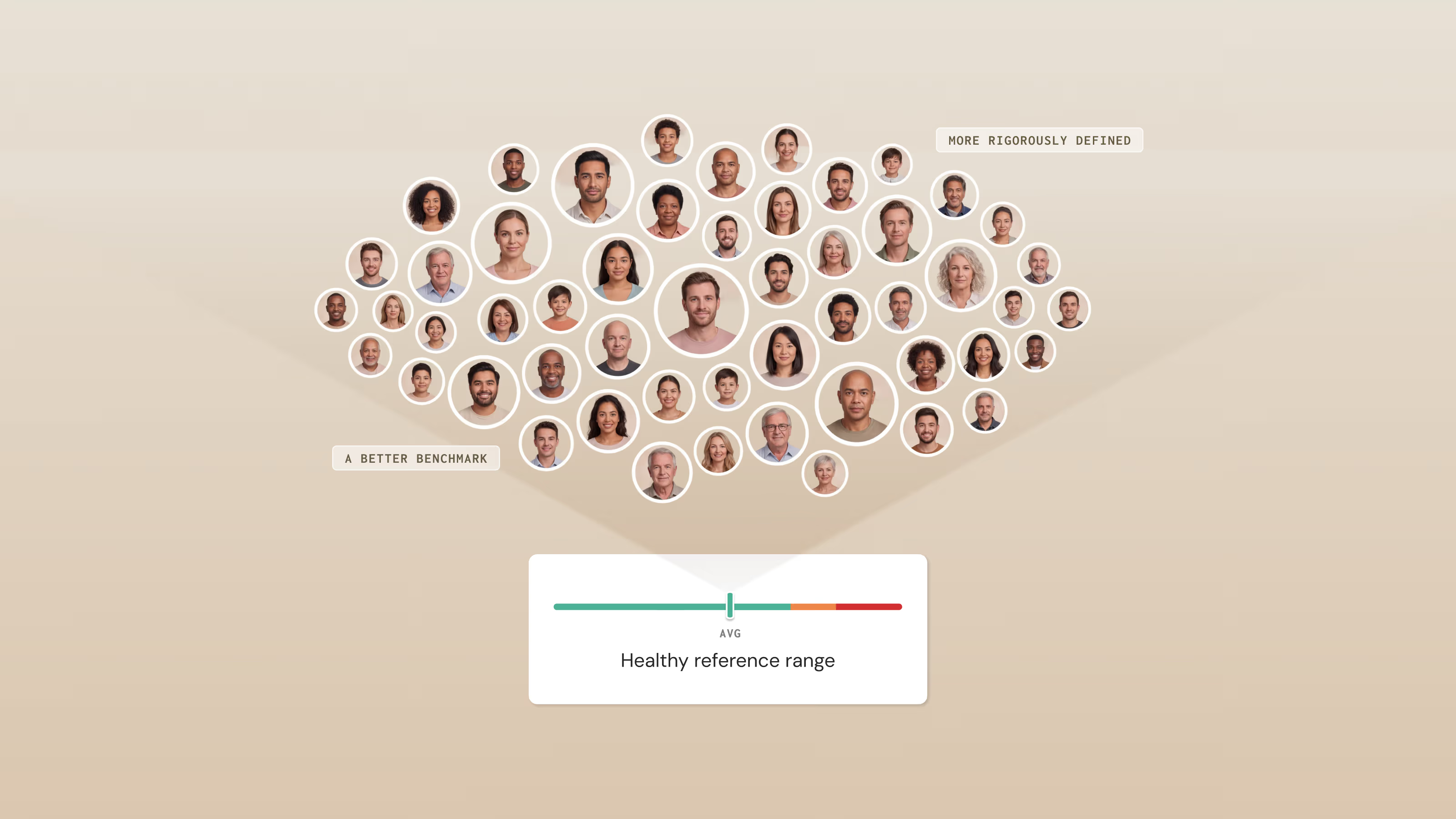
The Microba Healthy Cohort - the benchmark every Microba result is compared against has grown to more than 500 individuals, with tightened criteria – including reduced permitted alcohol consumption.
A larger, more stringently defined cohort gives more robust and more representative healthy reference ranges, strengthening the benchmark that underpins every report.
A recalibrated methane production scale
Whilst we have not changed the methane pathways or how methane production potential is measured, what has changed is the reference each result is placed against. The expanded cohort and refined standardisation calculations re-centre the distribution of methane production, recalibrating the reporting categories – Low, Borderline Low, Optimal, Borderline High and High.
Around 75% of profiles now sit approximately one category lower than under the previous reference. For example, a profile previously reported as High may now be reported as Borderline High. This reflects a more robust placement against the improved healthy cohort.
A more discriminating hydrogen sulphide assessment
Our previous assessment characterised the total potential for microbial hydrogen sulphide production, capturing known biochemical routes. That was, and remains, an accurate measure of total potential. However, recent research has refined the picture. The capacity to produce hydrogen sulphide from cysteine is now understood to be near-universal across the human gut microbiome – present in virtually everyone, regardless of health status (Braccia et al., 2021). Because it is so widely shared, it contributes a near-constant baseline rather than information that distinguishes one individual from another.
In our reference database of research-consented samples, including the cysteine pathways left minimal difference between healthy and disease-associated groups. With that shared baseline set aside, the remaining pathways revealed more meaningful differences across many disease-associated groups.
The updated assessment focuses on these discriminating pathways – a hydrogen sulphide metric that more clearly reflects the variation associated with gut health, while continuing to report a functional potential derived from metagenomic data.
Minor refinements to other pathways
We have also made minor technical refinements to several other metabolic pathway assessments – acetate, butyrate, propionate, trimethylamine, β-glucuronidase and oxalate degradation. These do not materially change results – but they do further sharpen the accuracy of the report.
However, please be advised that direct comparisons will not be like-for-like.
Comparing results over time
Due to the healthy cohort being expanded and refined, every reference range has shifted by a small amount. As a result, no marker is strictly like-for-like between past reports and new reports at point of cut-over, and healthy comparison results from before and after should not be compared directly. Two markers are affected more substantially:
- Methane production – categories have been recalibrated against the improved healthy cohort, shifting approximately 75% of profiles about one category lower. However, because the methane pathways assessed have not changed, to compare reports across the update, refer instead to the relative abundance numbers.
- Hydrogen sulphide – the assessment is now calculated differently, so results from before and after the cut-over are not directly comparable for this marker.
If reviewing a patient's results across the cut-over, interpret them in light of these methodology and reference changes rather than as like-for-like comparisons.
These changes reflect the continued maturation of microbiome science – not a correction of earlier work. The science was right then. It is more precise now. If you have questions about how these updates affect your patients’ reports, please reach out to our Clinical Support team who will be happy to help.
Better Science. Better Insights. Better Health.
Reference
- Braccia DJ, Jiang X, Pop M, Hall AB. The Capacity to Produce Hydrogen Sulfide (H2S) via Cysteine Degradation Is Ubiquitous in the Human Gut Microbiome. Front Microbiol. 2021;12:705583. doi:10.3389/fmicb.2021.705583