The tip of the iceberg: what your microbiome report doesn't tell you

A microbiome report can look comprehensive. Pages of microbial species, functional markers, gut health scores and disease-risk indices can create the impression of a detailed, scientifically robust analysis.
But how much can those results really tell us?
The information presented in a microbiome report is only the tip of the iceberg. Beneath the surface are the laboratory methods, analytical technologies and scientific evidence that determine how reliable and meaningful those results are.
The completeness illusion
A well-designed report instils confidence. Sections are filled. Markers are reported. Results are presented with visual clarity and clinical context. But the appearance of a comprehensive report doesn't necessarily reflect the breadth of testing performed or the strength of the scientific evidence supporting its findings.
Not all microbiome tests provide the same level of detail, breadth of testing or scientific evidence to support their findings.
Some microbiome tests rely on targeted PCR panels that assess only a few dozen predefined microbial species or groups. While these methods can provide accurate detection of their intended targets, they cannot characterise the broader microbial community or its functional potential in the same way as shotgun metagenomic sequencing.
Other reports may present extensive lists of gut health scores, dysbiosis indices or disease-risk predictions that appear clinically meaningful, but are based on microbial associations that have not been consistently replicated or adequately validated for their intended use.
This creates two important questions: How much of the microbial community is the test actually assessing? And how much scientific evidence supports the interpretation of its results?
A report can look complete without providing a comprehensive view of the gut microbiome, or without sufficient evidence to support the interpretations it presents.
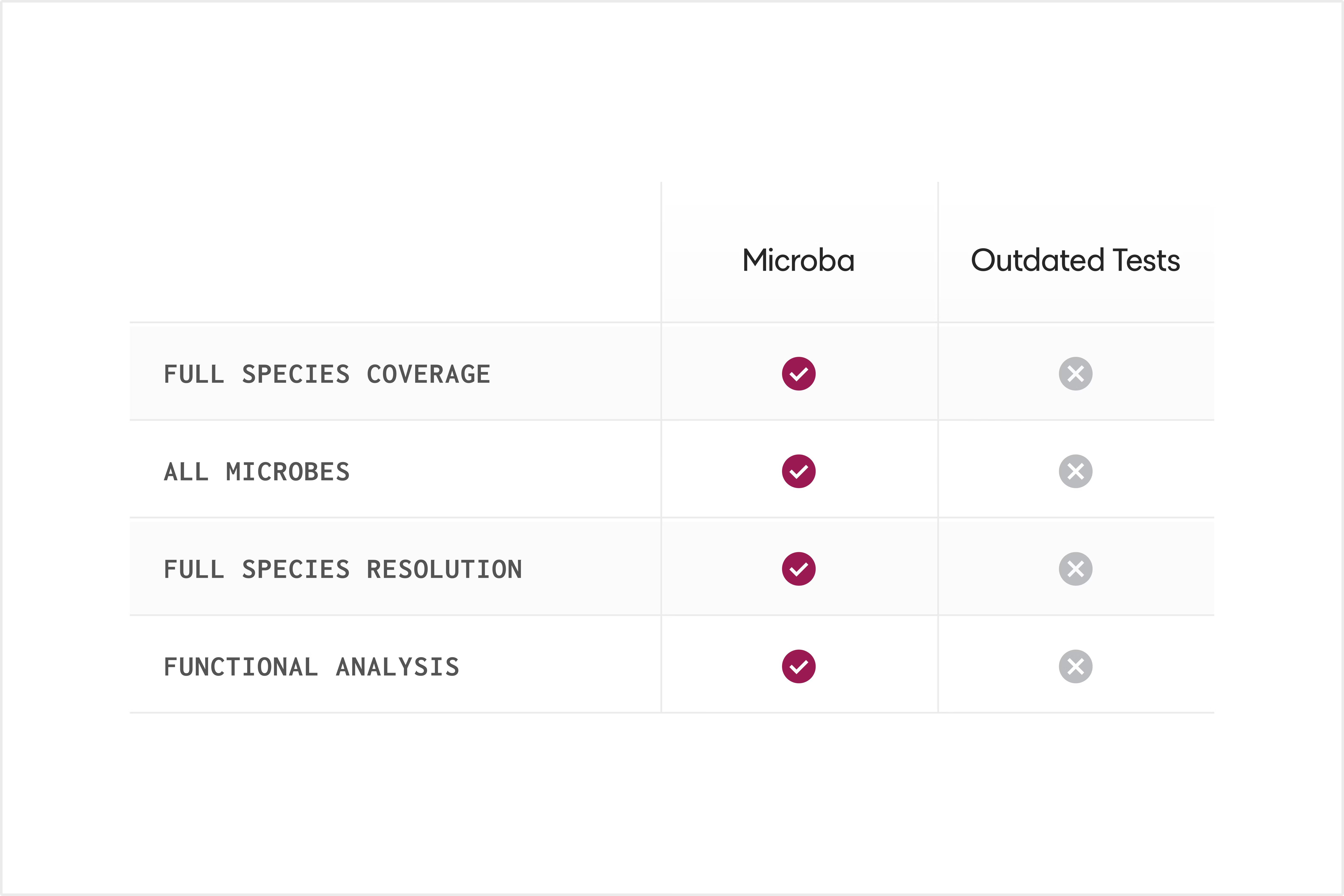
What determines the quality of microbiome analysis?
The technology used to analyse a stool sample plays a fundamental role in determining what information a microbiome test can provide.
Targeted PCR panels
Targeted PCR tests detect specific microbial DNA sequences using predefined assays. Some commercial microbiome tests use these methods to assess a limited panel of microbial species or groups. While targeted PCR can offer sensitive and accurate detection of selected organisms, it does not provide a community-wide assessment of microbial composition. Organisms outside the panel are not assessed, regardless of whether they are present in the sample.
16S rRNA gene sequencing
16S rRNA gene sequencing targets regions of a marker gene to characterise bacterial and sometimes archaeal communities. Depending on the method, it commonly provides genus-level resolution, although some organisms can be identified at species level. Unlike targeted PCR panels, 16S sequencing can survey a broad microbial community, but its taxonomic resolution and ability to directly assess microbial functional potential are limited.
Shotgun metagenomic sequencing
Shotgun metagenomic sequencing analyses DNA fragments from across microbial genomes, enabling broad microbial community profiling at species-level resolution. Unlike targeted PCR panels, it is not restricted to a predefined list of organisms. It also enables the direct assessment of microbial genes and pathways, providing information about the functional potential of the microbial community. However, the extent and accuracy of species identification and functional analysis still depend on reference databases and bioinformatics methods used.
Reference databases
Reference databases determine which organisms can be recognised and classified by the analytical pipeline. Differences in database coverage, quality and curation can influence the proportion of microbial DNA that can be classified and the reliability of species identification. However, a larger database does not necessarily guarantee more accurate results. The quality of reference sequences and the methods used to distinguish closely related organisms are also important.
Bioinformatics and analytical validation
The bioinformatics pipeline determines how sequencing data are processed, classified and translated into reported results. Analytical methods influence species identification, abundance estimates and the assessment of microbial functional potential. Importantly, these methods should be evaluated for accuracy, sensitivity and reproducibility, rather than simply for the number of organisms they can identify.
Together, these factors determine the analytical performance of a microbiome test — but analytical performance is only one part of the picture.
Bring confident care to your practice
Create your free practitioner account to explore our range of microbiome tests, sample reports and clinical resources.
ISO 15189 accredited
4,000+ practitioners trust Microba
Free clinical support
Beyond microbial composition: The importance of breadth of testing
Understanding the gut involves more than identifying which microbes are present. Microbial species profiling provides information about the composition of the microbial community, while functional analysis can assess its genetic capacity to produce or metabolise biologically relevant compounds.
Additional gastrointestinal testing can provide different, complementary types of information. For example, GI markers can assess aspects of intestinal inflammation or digestive function, while pathogen testing can identify specific gastrointestinal pathogens.
Bringing together these different types of information provides a broader view of the gut than microbial composition alone.
Not everything reported is supported by strong scientific evidence
Advances in microbiome research have revealed important associations between microbial species, community functions and human health. However, not all findings are equally well supported by scientific evidence.
Some microbiome reports include gut health scores, dysbiosis indices or disease-risk predictions based on a limited selection of microbial species or genera. While these measures may draw on published research, many have not been adequately validated in independent populations to establish their reliability, reproducibility or clinical relevance.
This doesn't mean that microbial associations lack value. Rather, the strength of the evidence supporting those associations, and how they are interpreted, matters.
A robust, evidence-informed approach considers multiple lines of evidence, including biological plausibility, reproducibility across human studies and whether findings can be confirmed in additional datasets.
Importantly, even reproducible associations do not necessarily establish causality or demonstrate that a marker can reliably diagnose disease, predict individual risk or guide treatment.
A more comprehensive, evidence-informed approach
At Microba, we combine comprehensive shotgun metagenomic profiling and validated bioinformatics with validated GI marker assays and pathogen testing, supported by an evidence-informed approach to interpretation. Together, these provide a broader view of the gut, bringing together microbial composition, community-wide functional potential and key measures of gastrointestinal health.
Our approach considers the scientific evidence supporting microbial markers and their associations with health, while recognising the limitations of current microbiome research.
One sample. One test. A more comprehensive view of the gut.
Because understanding the gut isn't simply about the number of results a test provides. It's about the quality of the analysis, the breadth of information available and how reliably that information can be interpreted.
Better science starts with looking beneath the surface.
Better science is better care. Expect Better.






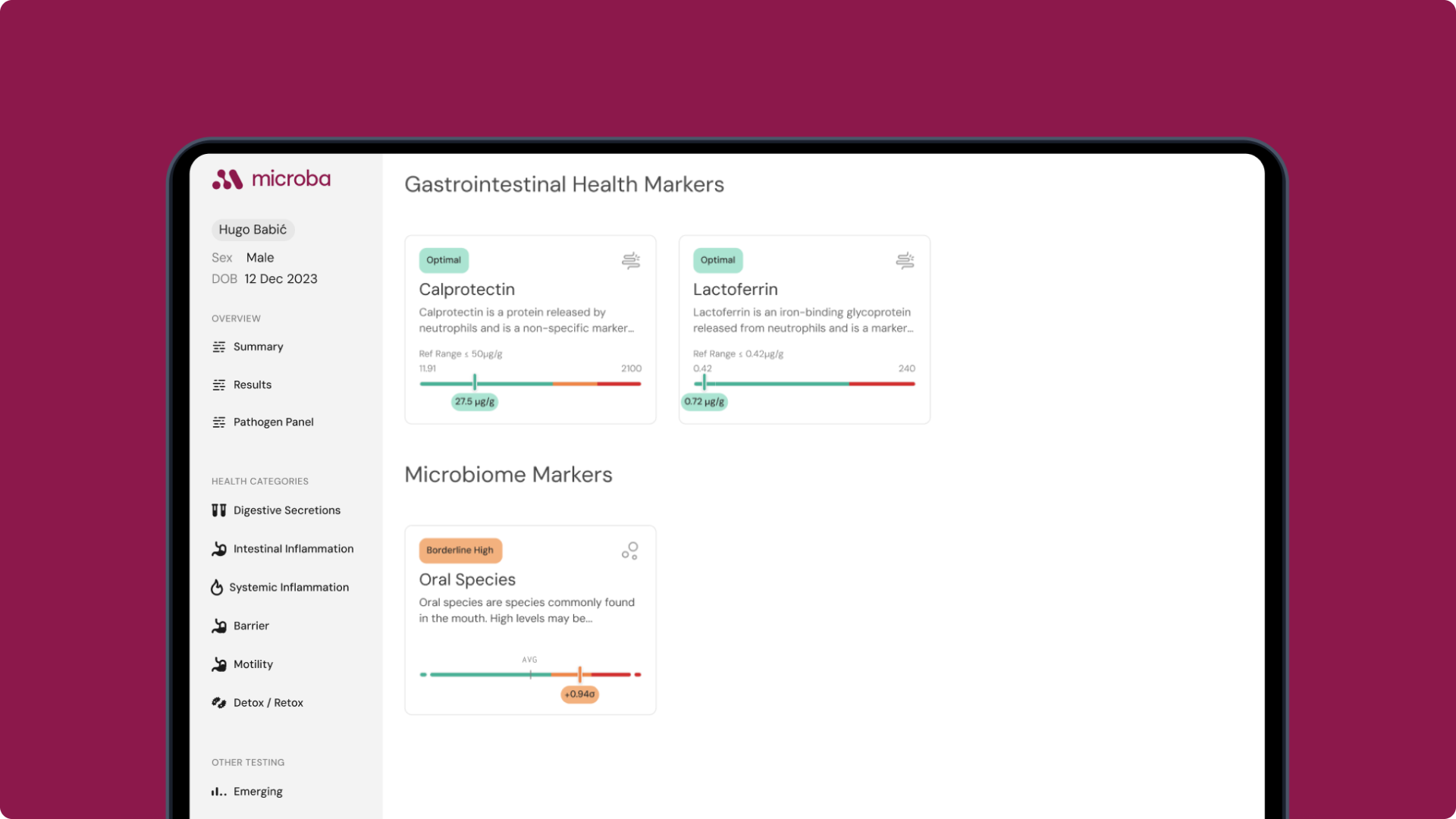
Become a Microba practitioner
Create your free practitioner account to explore Microba, access education and resources and get ready to start testing.

1. Create your free account
Complete a short registration, tell us about your practice and set up your login. You’ll get immediate access to the practitioner portal and education hub.

2. Verify your account
Access the practitioner portal and education hub while we verify your credentials. Verification is required before you can order tests.

3. Start with Microba
Once verified, you can order tests for your patients, explore Microba’s product range and access practitioner resources.