The species trap - why targeting individual organisms misses the clinical picture

The science has moved on. Has your test?
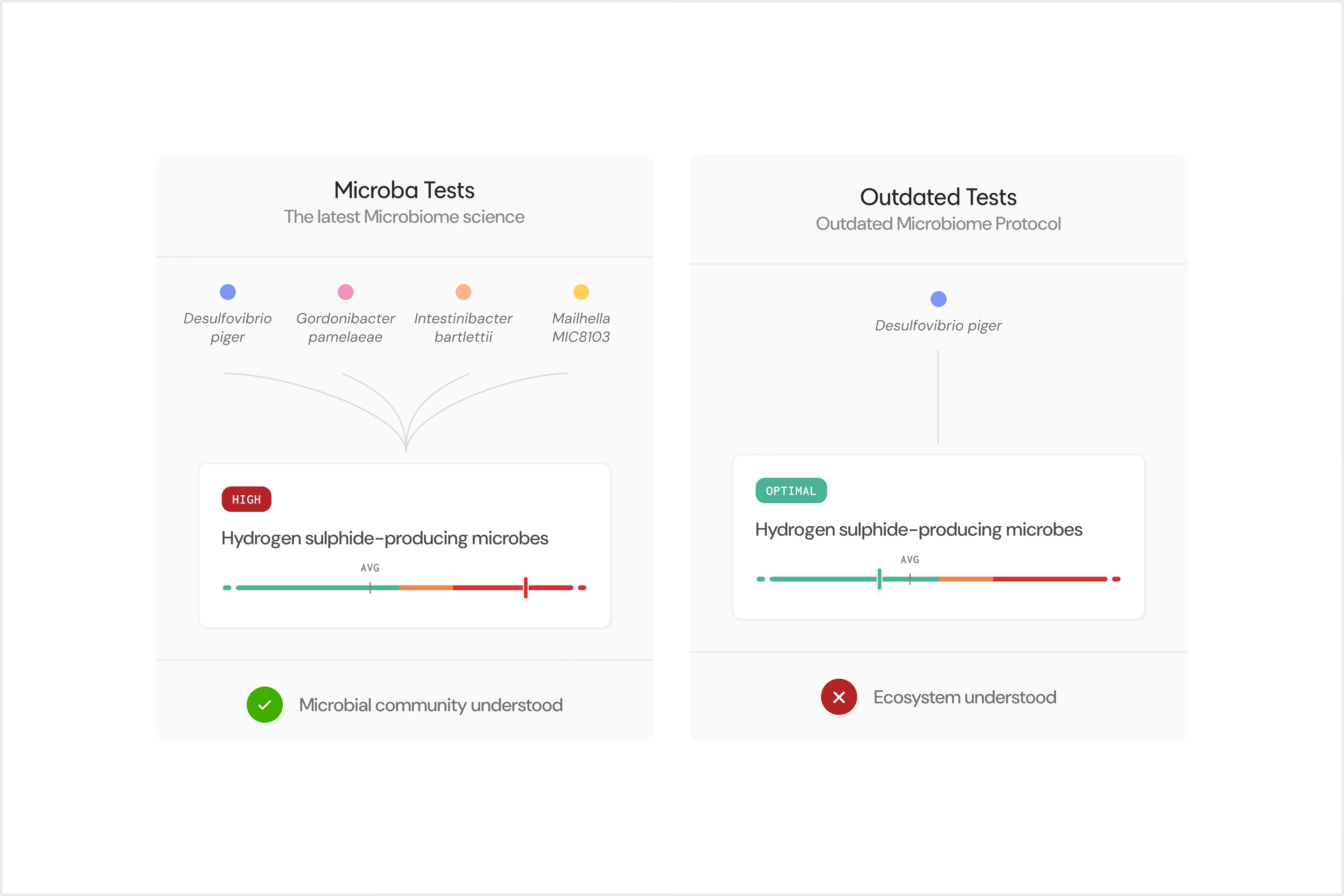
The instinct to identify and target specific microbial species is understandable. Clinical medicine is built on specificity — identify the pathogen, apply the treatment. But the microbiome doesn't follow that logic, and tests that report species in isolation can create a false sense of clinical clarity.
The appeal of specificity
Species-level identification feels like progress. A test returns a list of organisms — elevated, depleted, present, absent — and each finding implies an action. Reduce this one. Support that one. Target the outlier.
This approach works well for acute infections where a single pathogen drives the disease process. It's less useful — and potentially misleading — when applied to a complex ecosystem where health outcomes are emergent properties of community interactions, not direct consequences of individual organisms.
What the ecosystem actually does
The gut microbiome is a community of trillions of microorganisms operating as a functional system. Individual species contribute to that system, but their clinical significance is context-dependent: shaped by which other species are present, what metabolic functions the community is performing collectively, and how the whole community interacts with the host's immune system, gut barrier, and nutritional environment.
A species that appears harmful in one community context may be neutral or beneficial in another. A species that appears absent may simply be below the detection threshold of a less sensitive test. A species that appears elevated may be performing a compensatory function in response to a deficit elsewhere in the ecosystem.
Reporting species without this context is like diagnosing a patient from a single blood marker without looking at the rest of the panel.
The clinical consequence
When treatment plans are built on species-level findings without ecosystem context, practitioners face an uncomfortable reality: confidence in the plan may exceed the evidence supporting it.
Targeting an elevated species without understanding its functional role in the community risks disrupting the ecosystem in unpredictable ways. Supplementing a depleted species without understanding why it's depleted risks treating a symptom rather than a cause. The treatment plan may look decisive. It may simply be incomplete.
The question to ask is: does your test simply report a few species that are present, or does it help you interpret what matters using carefully curated markers and evidence-graded interventions?
From species to systems
The shift from species-level reporting to community level analysis reflects the direction the science has moved. Shotgun metagenomic sequencing makes it possible to map not just which organisms are present, but what they're capable of doing — revealing metabolic pathways and the functional capacity of the microbial community,and providing a more complete picture of how the microbiome may influence health.
Microba is built on this principle. It reports microbial communities, functional pathways, and key markers of the gut environment, alongside species-level identification — because the clinical picture isn't a list individuals. It's a forest.
Better science is better care. Expect Better.


Become a Microba practitioner
Create your free practitioner account to explore Microba, access education and resources and get ready to start testing.

1. Create your free account
Complete a short registration, tell us about your practice and set up your login. You’ll get immediate access to the practitioner portal and education hub.

2. Verify your account
Access the practitioner portal and education hub while we verify your credentials. Verification is required before you can order tests.

3. Start with Microba
Once verified, you can order tests for your patients, explore Microba’s product range and access practitioner resources.