Keeping the science current: our 2025–2026 evidence review
.avif)
How Microba’s Science Review Process keeps the intervention research linked to your microbiome and gut health markers grounded in the latest evidence.
The gut microbiome is one of the fastest-moving fields in health research, with new studies published every week. That momentum is exciting – but it also creates a practical problem: research quality varies, and turning a large, uneven body of evidence into guidance you can rely on takes careful, consistent appraisal.
This is why every intervention we present alongside a patient’s microbiome and gut health markers is assessed through Microba’s Science Review Process (SRP). Here is what changed in our latest review.
How we grade the evidence
Microba’s SRP is grounded in evidence-based medicine – the systematic process of finding, appraising and applying the best available research to inform clinical decisions.1 Rather than judging studies one at a time, the SRP appraises the whole body of evidence behind each marker-and-intervention pairing, then assigns a grade using the National Health and Medical Research Council (NHMRC) Levels of Evidence.2 Two components carry the most weight: the strength of the evidence base and how consistent the findings are across studies.
Each grade signals how much confidence the evidence warrants:
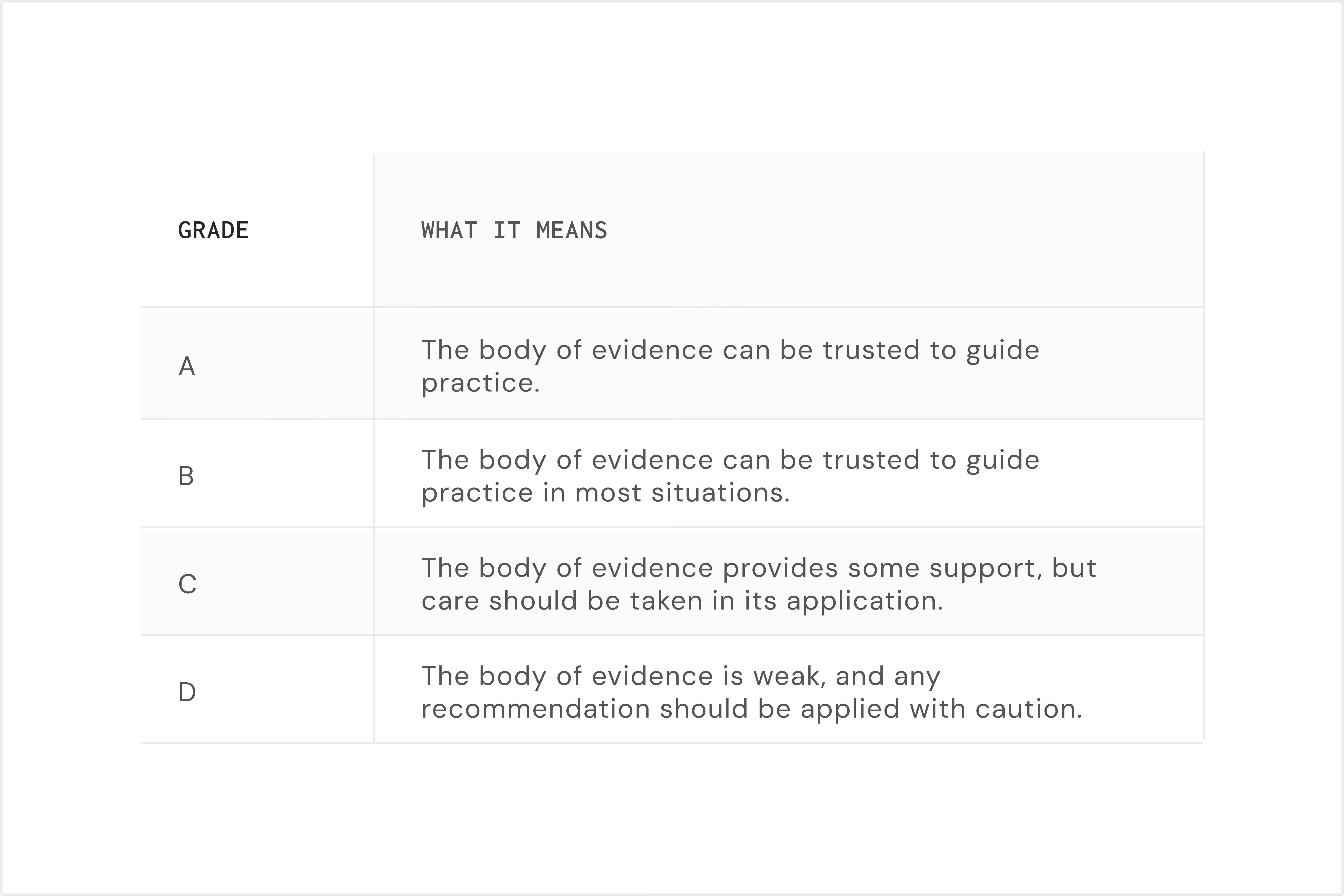
Where human evidence is insufficient, we do not assign a grade, even in the presence of compelling laboratory or animal data – a plausible mechanism of action, for example. Instead, the finding is flagged as a practice point, with the type of study made explicit. The result is that you can see the strength of the evidence at a glance, right beside the finding itself. Our Science Review Process white paper sets out the full method, including the risk-of-bias tools and the consensus workshops used to reach each grade.
What the 2025–2026 review covered
First, we reviewed the literature behind existing interventions. Where newer or higher-quality studies had been published, we updated the NHMRC grade to match. Some interventions were strengthened by fresh evidence, others were lowered, and a small number were retired where the current evidence no longer supported them. This is the process working as intended – grades move with the evidence, in both directions.
Second, we searched for new interventional research across our microbiome and gastrointestinal health markers and added 26 new interventions to the Related Intervention Research. These span dietary approaches, prebiotic and probiotic supplementation, and targeted nutritional supplements. For instance, a newly added Grade C intervention supports a diverse, high-fibre diet to encourage acetate-producing microbes, and a set of new dietary strategies was added for histamine-producing microbes – an area where the evidence, while still emerging, now warrants practical, clearly graded guidance.
What this means in practice
The practical value for practitioners is transparency. Every intervention linked to a microbiome or gut health marker carries an evidence grade, so you know how much weight to give it before discussing an option with a patient. A Grade A or B intervention rests on stronger, more consistent human evidence than a Grade C, D or practice point – and understanding that distinction helps you weigh choices and set realistic expectations.
The microbiome markers, and the interventions related to them, are provided to support research-informed conversations, not to diagnose. Clinical decisions remain yours, made in the context of each patient’s full clinical picture.
An ongoing commitment
Microba’s Science Review Process exists to give healthcare professionals a transparent, consistent view of the evidence behind gut health testing. Because the science keeps advancing, we will keep applying the SRP at regular intervals, so your results – and the research related to them – reflect the best available evidence.
Better science. Better insights. Better health.
References
- Sackett, D. L., Rosenberg, W. M. C., Gray, J. A. M., Haynes, R. B. & Richardson, W. S. Evidence based medicine: what it is and what it isn’t. BMJ 312, 71 (1996).
- NHMRC. NHMRC levels of evidence and grades for recommendations for developers of guidelines. (2009).